Disordered proteins as sensors and actuators
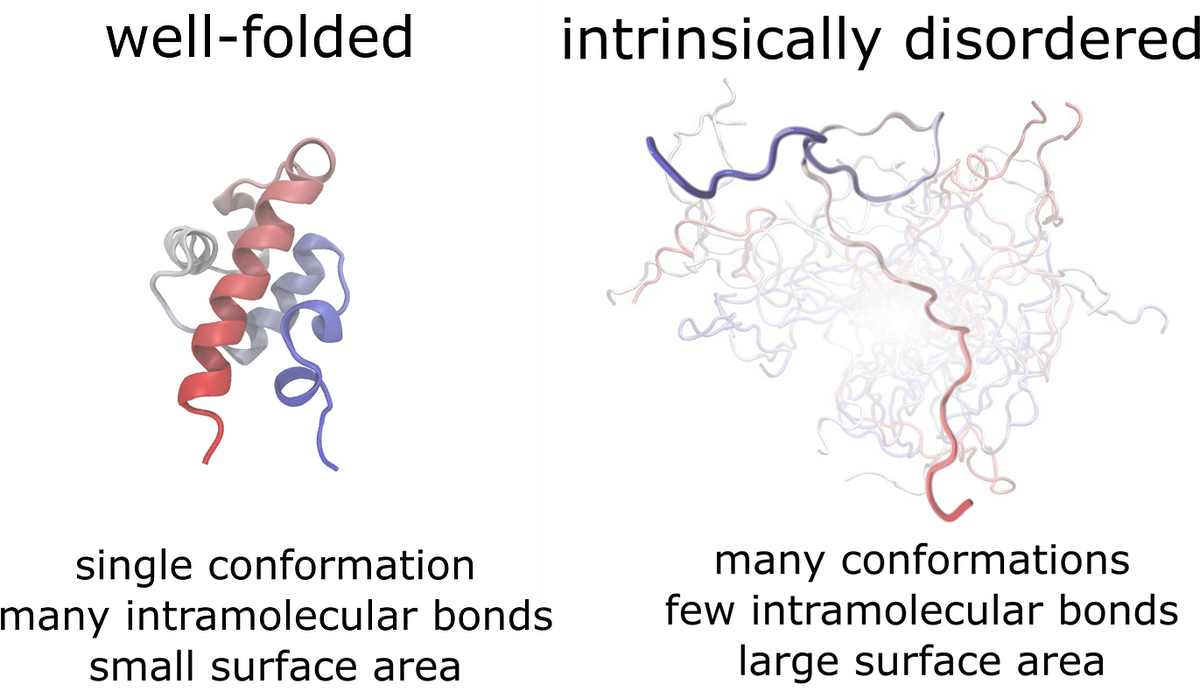
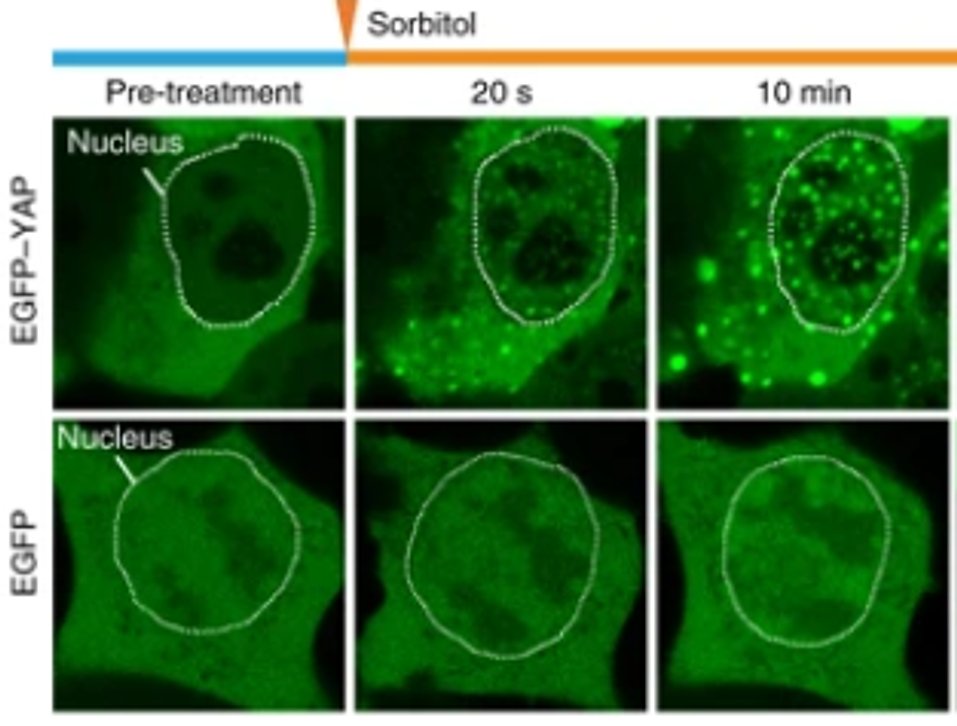
Disordered proteins do not have a fixed three-dimensional form, and exist instead as an ensemble of rapidly interconverting conformations. This makes them sensitive to even mild changes in the physical-chemical environment of the cell. Yet how even routine changes to the cellular environment affect disordered proteins remain unknown. Our lab is developing methods to understand how routine events (i.e. cell cycle changes) or pathological conditions (e.g. metabolic changes in cancer) alter the dynamics and function of disordered proteins.
Key publications: Hunter, Brandt et al. Nature 2026; Moses, Guadalupe et al. Nat. Struct. Mol Biol 2024.